Hospitals
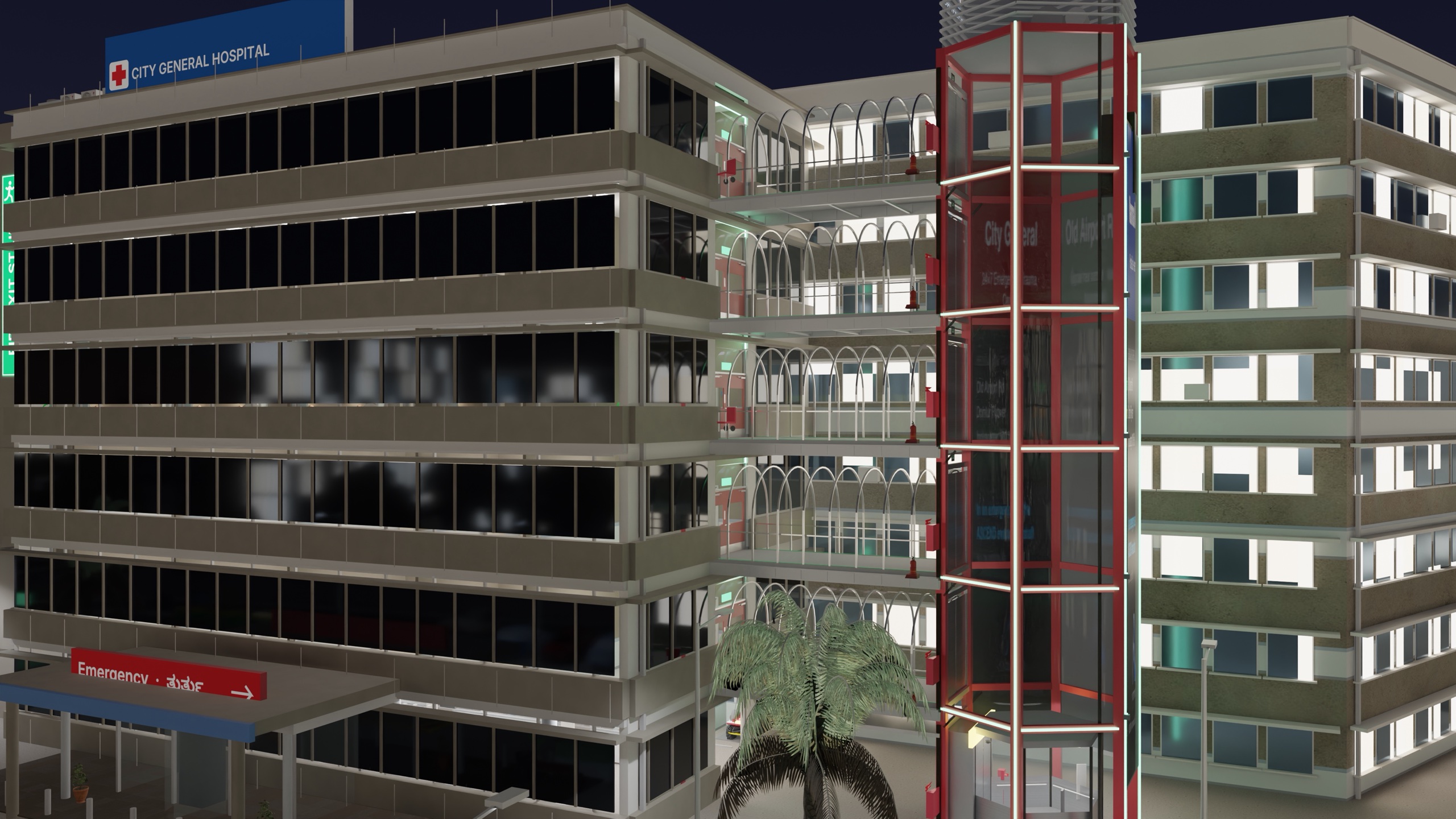
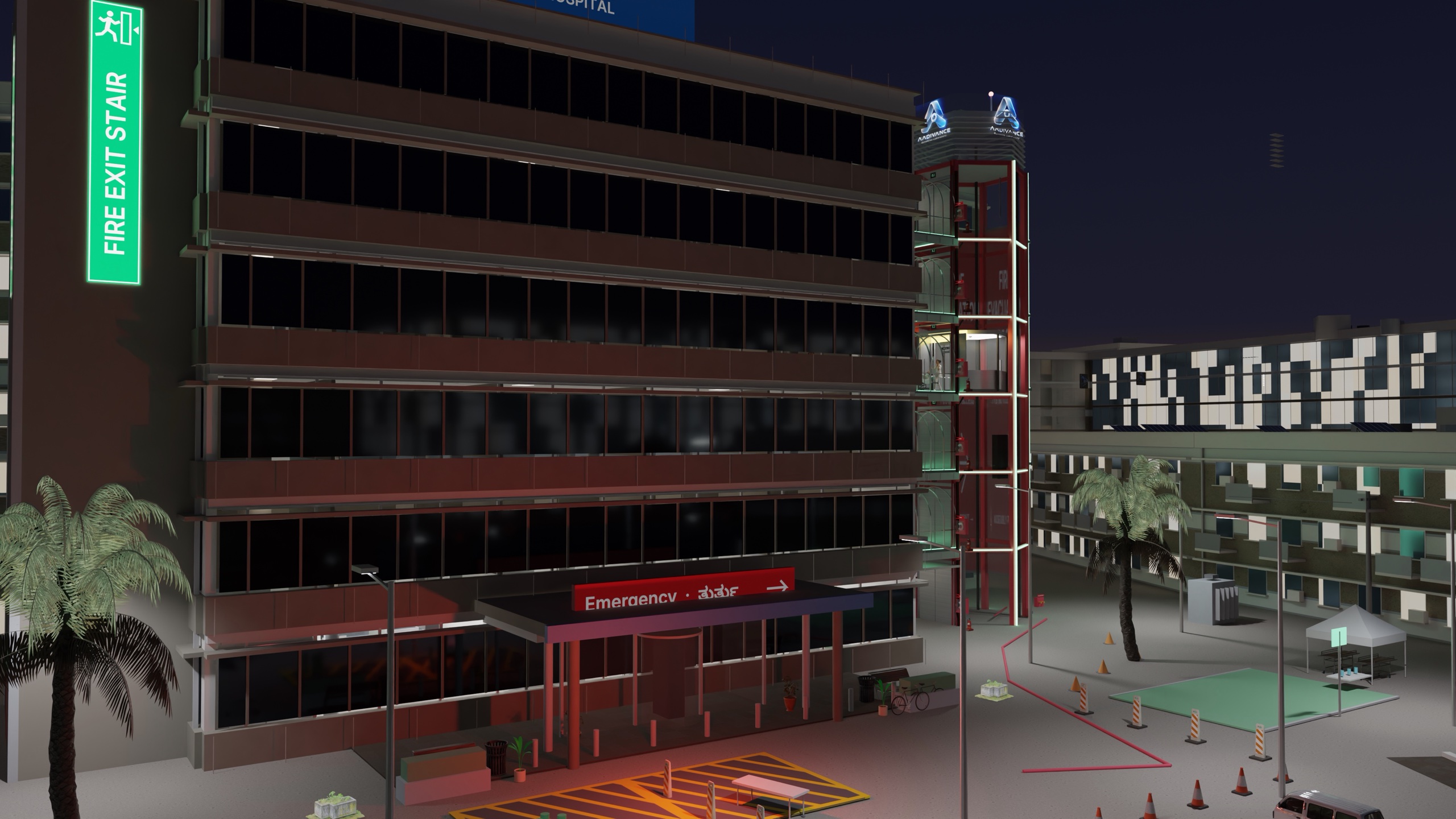
ICU and surgical floors need a way out that does not wait for the generator to start.
- Designed to NBC Part 4 fire and life safety
- Keeps evacuating patients through a full blackout
- Fits beside an existing tower, with no machine room
 AADIVANCE
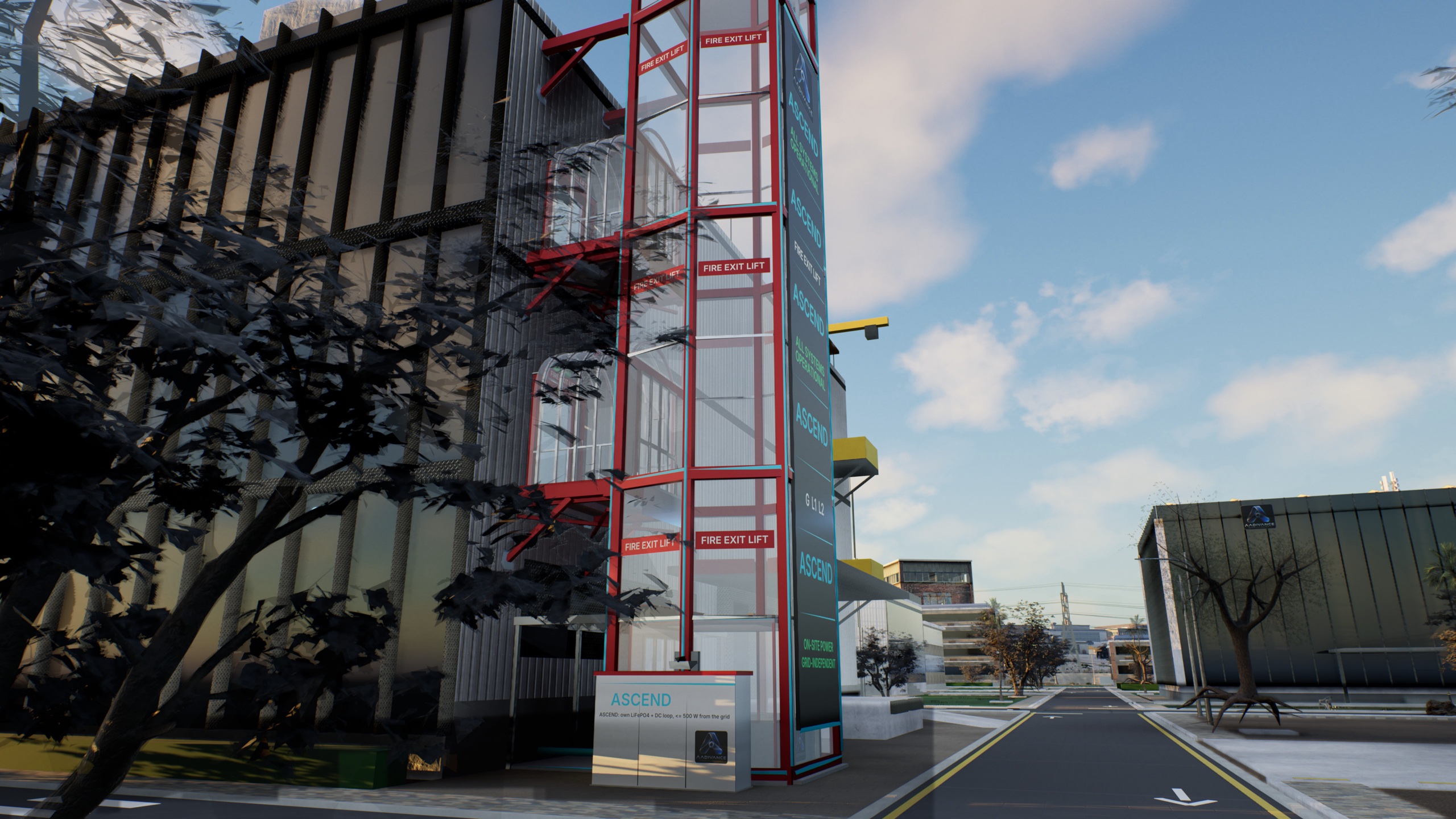
ASCEND AI is a parallel evacuation lift on its own 48 V solar-battery loop, built for hospitals, offshore platforms and data centres. When the power, the generator and the network all fail, it keeps carrying people out.
A parallel lift and evacuation system with its own power, its own controls and its own way out, for hospitals, offshore platforms and data centres.
The lift stands beside the building on its own 48 V DC loop. When the building's AC trips, nothing in the lift is connected to it.
Solar and a LiFePO4 battery feed a direct-drive BLDC motor on an open deck. No machine room, and a 1 kW peak draw.
An edge-AI node on every floor calls the car. Planar motors slide the doors with magnets, no centre motor or belt.
Machine-room floor area taken from the building.
ASCEND's low-voltage DC loop is wired separately from the building supply. A trip on the main grid never reaches it.
No central machine room and no deep pit. Developers get that floor area back as saleable FSI.
Capsules are designed to be added beside a building in service, alongside the lifts it already has.
Designed to the National Building Code fire and life safety part, with NFPA, OISD and API norms for energy sites.
Peak draw for an 800 kg payload. Legacy drives pull 7 to 10 kW.
The whole drive peaks at 1,000 W. Legacy hoists and their ventilation pull 7 to 10 kW from the high-voltage grid.
A steady trickle charge fills a LiFePO4 buffer from the roof solar array. Each trip draws that stored energy back out in short bursts.
An in-house permanent-magnet motor and drive, about half the size of a conventional lift motor, moving an 800 kg payload.
Low-voltage DC topology and custom magnetic flux distribution cut the power needed by nearly 60% against legacy systems.
Edge-AI node on every floor. No central server to fail.
A controller on every floor calls and routes the cabin locally. Nothing waits on a central server.
Floor nodes start extraction fans and keep the capsule's path free of smoke while it runs.
Nodes map the hazard, open smart exit doors and send people to the nearest safe landing.
Each floor acts as its own command station if the rest of the building goes dark or offline.
ICU and surgical floors need a way out that does not wait for the generator to start.
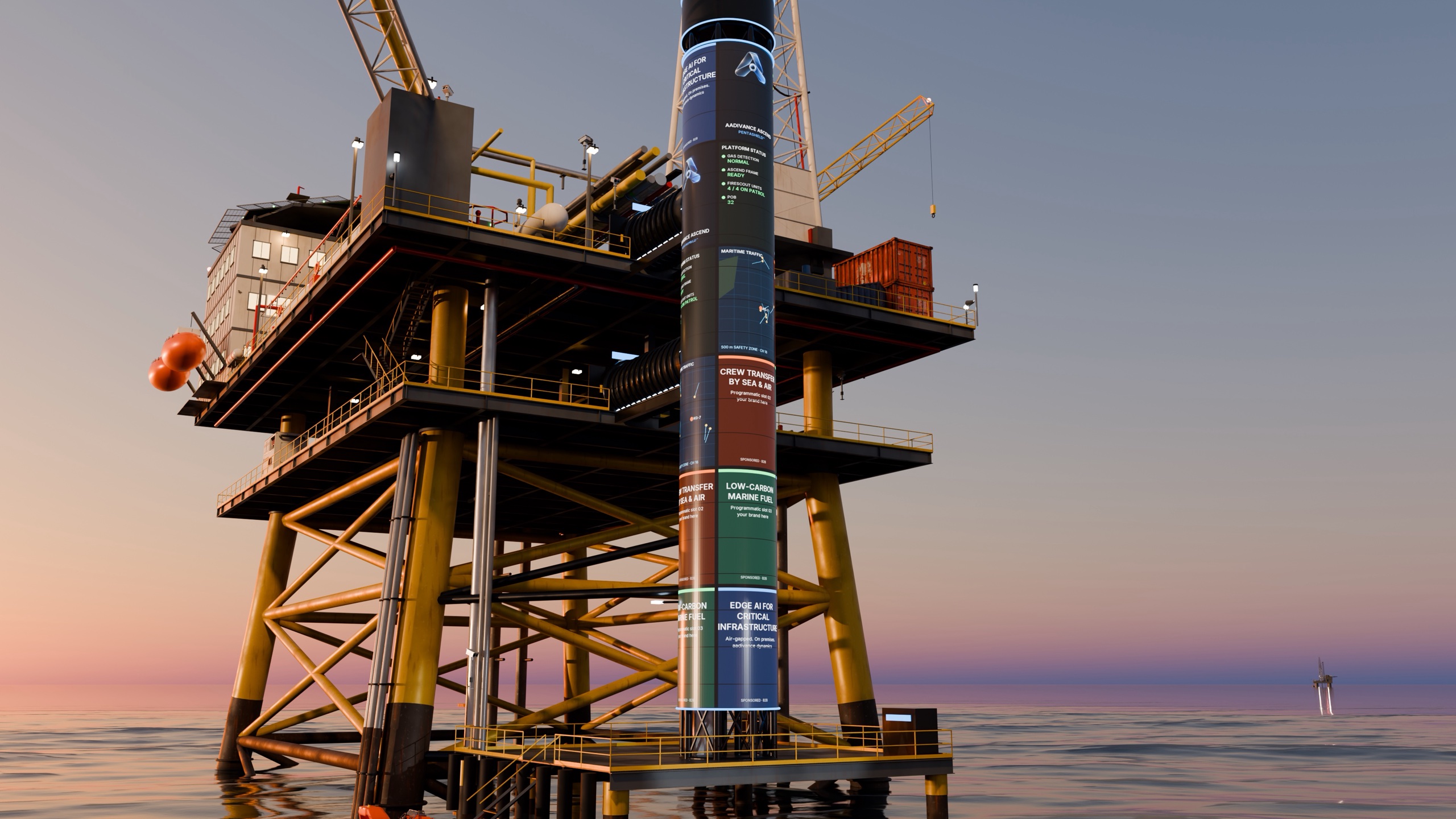
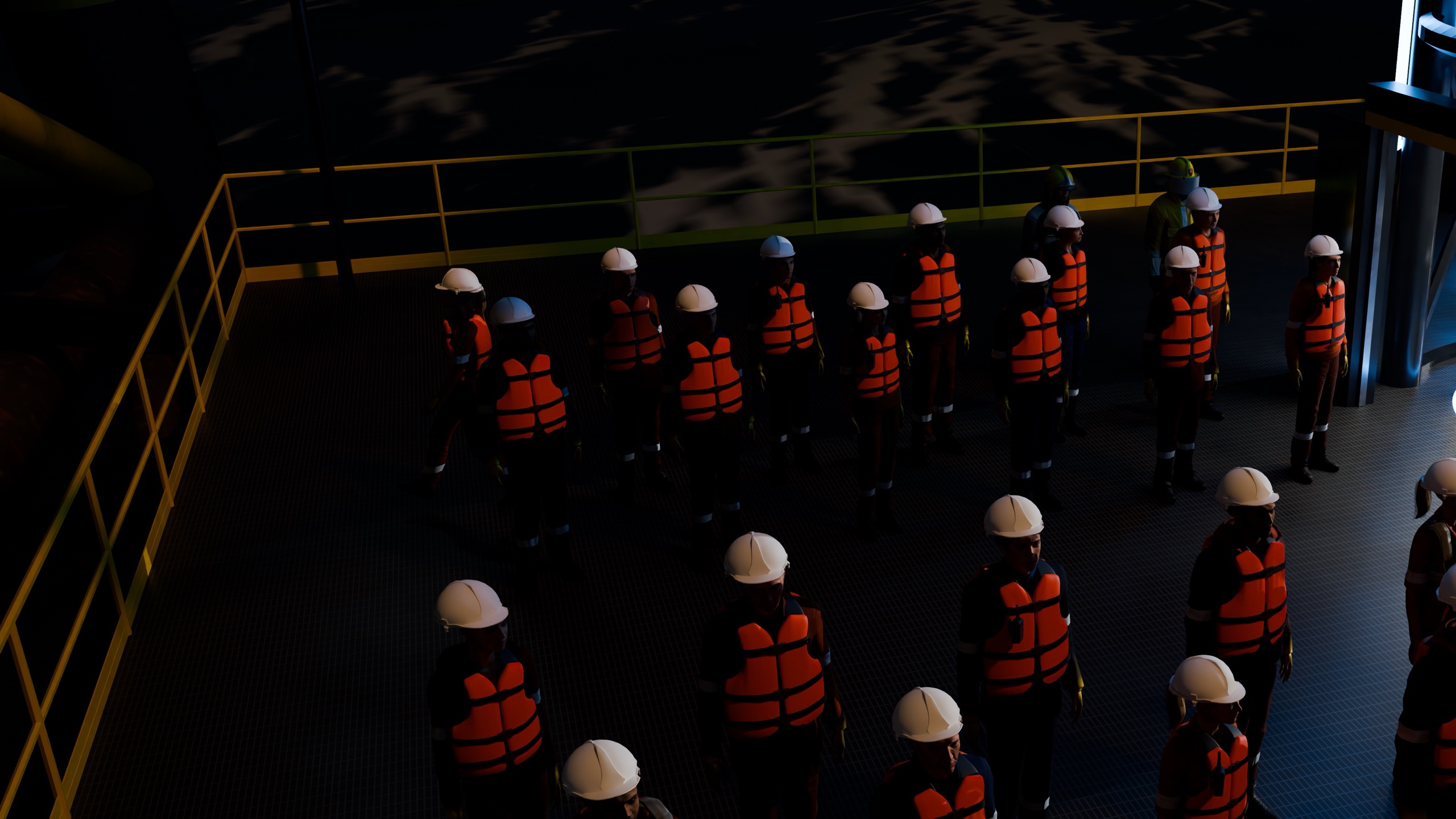
On a platform, the main supply trips the moment gas is detected. The lift is still the crew's way down.
Battery rooms burn fast. Staff and spares still have to move between halls while UPS strings are isolated.
The places ASCEND is designed for. Drag to explore the scenarios we simulate in our digital twin.
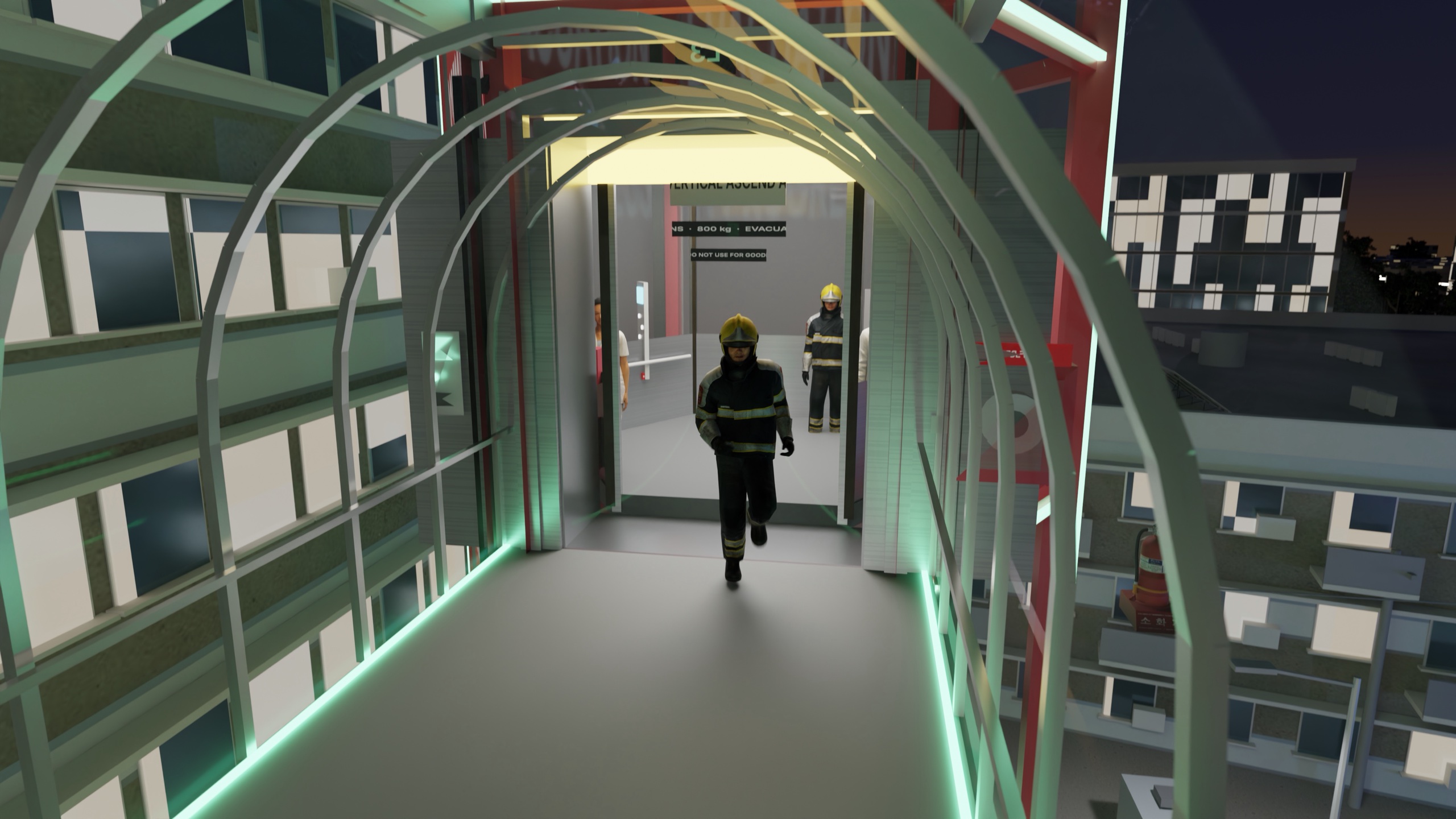
HealthcarePatients leave the ward through a covered bridge into the ASCEND tower while the main building is on fire.
HealthcareThe mains drop and the generator is still cranking. ASCEND is already on its way to the call.
 Data centres
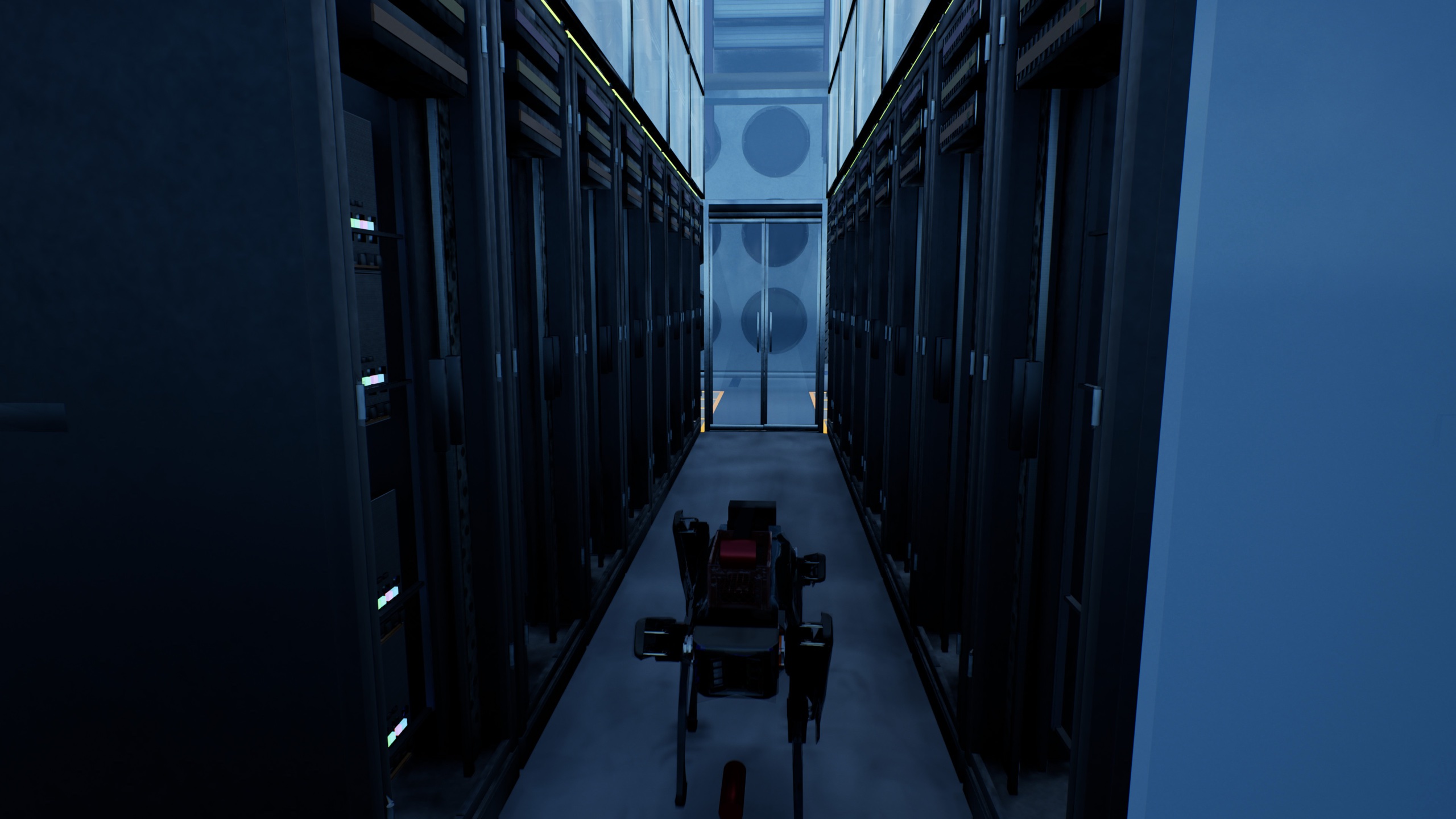
Staff and spares move between data-hall floors while a UPS string is isolated and the hall keeps running.
EnergyGas is detected and the platform supply trips. The crew musters at the ASCEND landing and goes down in turns.
 Energy
K9 robots walk the decks at night, map every flange and call the lift for the crew when a leak is found.
 Energy
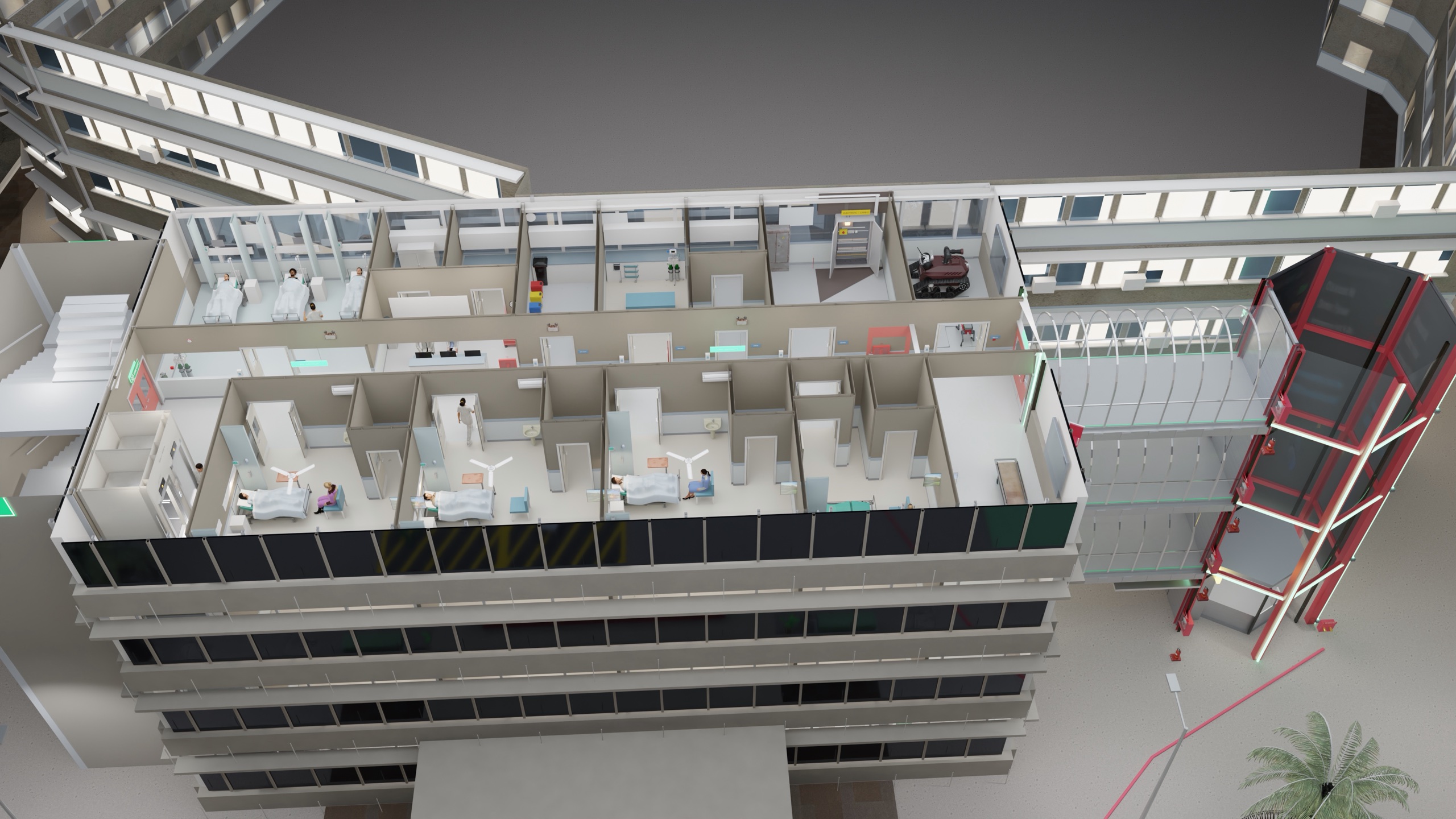
Tracked FireScout robots move toward the fire while the crew moves away from it.
 Real estate
The digital twin shows each floor node, each capsule trip and each person still inside the building.
 Data centres
K9 patrol robots read every rack light by day and lead people to the capsule during an alarm.
 Data centres
Every capsule trip, floor node and door appears on the operations wall alongside power and cooling.
Images are renders from Aadivance's simulation films, not photographs of installed sites.
The same 48 V direct-drive motor and edge-AI controls, sized for hospitals, hazardous sites and the air.
ASCEND CapsuleParallel, grid-independent lift Lab-tested prototype |
ASCEND TwinWorkforce evacuation & material transit Pilot · year 1 |
FluxMotion HoistModular aerial logistics hoist In development |
|
|---|---|---|---|
| Role | Evacuation & daily lift | Evacuation & transit | Heavy-lift hoisting |
| Payload | 800 kg | 800 kg | Up to 1,000 kg |
| Peak draw | 1 kW | 1 kW | To be announced |
| Power bus | 48 V LVDC | 48 V LVDC | 48 V LVDC direct drive |
| Rated speed | 0.4 m/s | Site specific | To be announced |
| Energy store | LiFePO4 + solar | LiFePO4 + solar | Host aircraft |
| Environment | Hospitals, high-rise, malls | Rigs, refineries, Class I Div 1 | Heavy-lift drones, VTOLs |
A lift that carries 800 kg on the power of a water heater, keeps its own energy, and makes its own decisions on every floor.
ASCEND Capsule runs on a 48 V DC loop fed by a roof solar array and a LiFePO4 battery, separate from the building's AC supply. The FluxAscend motor is direct drive, so there is no gearbox and no machine room. Doors run on a planar magnetic drive with no motor at the centre. A trip uses about 17 Wh, so a full charge covers more than 60 trips with the grid off. Edge-AI nodes on each floor dispatch the car, run smoke extraction and route people, with no central server to fail.
Own DC loop. Keeps running through blackouts and fires.
1 kW peak draw. About 17 Wh per trip.
No machine room. Motor about half the size of a conventional one.
Air-gapped edge-AI node on every floor.
Planar magnetic door drive with magnets on the panels.
Designed to NBC Part 4 fire and life safety.
A glazed steel tower beside the building, with its own solar roof and battery, connected to each floor by a landing door.
Everything that moves in ASCEND is driven by magnets: a compact BLDC motor turns the sheave, and a planar motor slides the doors. Drag a view to turn it.
A brushless DC motor built in house. Permanent magnets on the rotor, coils on the stator, switched electronically from the 48 V bus. It drives the traction sheave directly and is about half the size of a conventional lift motor.
A stationary array of coils runs above the opening. Each door panel carries a grid of magnets. Only the coils over the magnets switch on, in a travelling wave, so the panels glide open with no motor, belt or linkage in the centre.
Powertrain built and validated in house. Moves 800 kg on a 1,000 W draw. 15+ patents in the pipeline.
Safety and thermal certification for the enclosures, and a high-traffic pilot in a Bengaluru building.
Contracts with multi-specialty hospital networks and PSU partners. ASCEND variants in production.
FluxMotion modules for data-centre cooling and heavy-lift hoists for drones and VTOLs.

We are a small team of power-electronics, magnetics and embedded engineers in Bengaluru. If you want to work on motors, drives and edge AI that ship into real buildings, write to us.
Get in touch →Tell us about the building. We will size a capsule, a solar array and a battery for it.